


Prioritize Cornea Care: Your Cornea Is Vital for Protecting Your Eyes
The cornea is the clear, outermost tissue of the eye. It functions like a window, allowing light to enter the eye and helping focus images on the retina.
The cornea must remain healthy and clear to function at its best. When cornea problems develop because of disease, injury, infection, or structural changes, they may affect both the clarity and quality of your vision.
At Center For Sight, we can help care for your cornea. Visit one of our locations for an eye exam, and our team of nationally-regarded doctors can diagnose any problems before recommending treatments suited for your vision needs.
Our Corneal Surgeons
He completed his surgical internship and ophthalmology residency training at Columbia University Medical Center, where he was Chief Surgical Resident, followed by a Cornea, External Diseases, and Refractive Surgery fellowship at the Johns Hopkins Wilmer Eye Institute.
Dr. Elizabeth Davis is a board certified ophthalmologist who is fellowship-trained cataract, refractive, and corneal surgeon. She received her Medical Degree from John Hopkins University of Medicine graduating first in her class.
Dr. Davis also completed a received a HEED Ophthalmic Foundation Scholarship to complete subspecialty fellowship training in cornea, external disease, refractive surgery, and glaucoma.
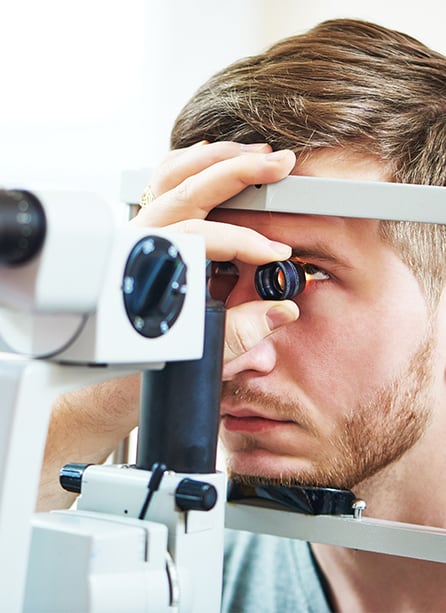

Why the Cornea Matters and How Cornea Problems Affect Vision
Your cornea plays several important roles related to your eye health and vision. The essential functions of your cornea include:
- Protecting the structures inside the eye
- Contributing to the refractive power of the eye
- Focusing light rays on the retina
Cornea problems can develop when the tissue is affected by injury, infection, disease, inflammation, or inherited conditions. Depending on the damage to the cornea, one of our specialists can recommend a suitable treatment plan.

Common Cornea Problems We Treat
Many conditions can affect the cornea, ranging from dry eyes to significant diseases. A swollen or scarred cornea can make it difficult to see, causing cloudy or distorted vision.
At Center For Sight, our board-certified specialists provide advanced cornea care and personalized cornea treatments in Southwest Florida communities.
Fuchs’ Dystrophy
Fuchs’ dystrophy is a disease where the cells in the corneal layer called the endothelium gradually die. These cells help remove fluid from the cornea to keep it clear, but the cornea may swell once the cells have died. Fluid builds up, leading to cloudy or hazy vision.
Keratoconus
Keratoconus is an eye condition where the typically round, dome-shaped cornea progressively thins and weakens with time. This progression causes the development of a cone-like bulge and optical irregularity of the cornea, leading to significant visual impairment.
Cornea Treatments
The appropriate treatment depends on the condition affecting your cornea, its severity, and the amount of damage present. Our specialists may recommend monitoring, medication, specialty contact lenses, or a surgical procedure based on your individual eye health and vision needs.
These treatments are intended to protect the health of the eye, stabilize the cornea, and improve functional vision when possible.
Corneal Transplantation
A corneal transplant may be ideal when a cornea is beyond repair or healing. It involves replacing a damaged or diseased cornea with a clear, healthy cornea from a donor.
There are 2 types of corneal transplantation: full and partial thickness. A partial-thickness transplant involves replacing portions of a damaged cornea, while a full-thickness transplant replaces the entire cornea. The IntraLase femtosecond laser used at Center For Sight allows us to perform surgeries accurately and safely.
Corneal Cross-Linking
Corneal cross-linking is a minimally invasive procedure to treat keratoconus and corneal ectasia. Patients receive specialized eye drops before looking into an ultraviolet (UV) light. The UV light triggers the medicated eye drops, causing the linking of collagen fibers to strengthen the cornea.
Fuchs’ Dystrophy Treatment
Some treatments are specific to Fuchs’ dystrophy, such as DSAEK (Descemet’s stripping automated endothelial keratoplasty) transplant. This procedure is a partial-thickness transplant that only replaces the diseased posterior layer of the cornea.
Another procedure is DMEK (Descemet membrane endothelial keratoplasty), a form of partial-thickness corneal transplantation. This technique offers the highest quality of vision and faster recovery time.
Protect the Structures of Your Eyes
Certain conditions can damage your cornea and affect your eyesight if left untreated. Your cornea is essential for vision, and so are the other structures of your eye.
At Center For Sight, our eye care physicians provide personalized cornea care for patients in Southwest Florida. Schedule an appointment to have your symptoms evaluated and learn which treatment options may be appropriate for your needs.
Frequently Asked Questions
What is corneal cross‑linking, and how does it help?
Corneal cross-linking (CXL) uses vitamin B2 (riboflavin) drops combined with ultraviolet (UV) light to strengthen the cornea by creating additional collagen bonds. This treatment helps halt the progression of keratoconus and prevents further thinning or bulging. While it may not fully restore vision, it stabilizes the cornea and can reduce the need for more invasive procedures.
What is keratoconus, & what causes keratoconus?
Keratoconus is a condition where the cornea thins and gradually bulges into a cone-like shape, distorting vision. It can cause blurred vision, glare, and increased sensitivity to light. The condition may result from a mix of genetic factors, eye rubbing, and other environmental or biomechanical influences. Early cornea care can help identify progression and determine whether treatment is needed.
Where can I find keratoconus treatment near me?
Center For Sight provides specialized keratoconus treatment and cornea care in Port Charlotte and throughout Southwest Florida. Treatment may include monitoring, specialty contact lenses, or corneal transplantation, depending on the severity and progression of the condition.
How quickly can vision improve following advanced cornea treatment?
Vision improvement after procedures like CXL is usually gradual, as the main goal is to stabilize the cornea. Some patients notice improvement within 3–6 months, while others may need corrective lenses to achieve clearer vision. Regular follow-up ensures optimal recovery and allows adjustments to glasses or contact lenses as needed.

Our Locations







News
Are Flashing Lights and Blind Spots Signs of a Retinal Tear?
Eye Care, Retina TreatmentReviewed By: Dr. Tanuj Banker Sudden flashes of light, new floaters, or changes in peripheral vision can be symptoms of a retinal tear. A dark curtain, shadow, or new blind spot may mean the retina has started to detach and needs immediate attention. Because these symptoms can overlap with less serious eye changes, a dilated eye […]
Read More… from Are Flashing Lights and Blind Spots Signs of a Retinal Tear?
LASIK vs EVO ICL: Which Vision Correction Procedure Is Right for You?
Eye Care, LASIKLASIK reshapes the cornea with a laser, while EVO ICL surgery places a prescription lens inside the eye without removing corneal tissue. LASIK can correct nearsightedness, farsightedness, and astigmatism in appropriate candidates. EVO ICL is designed for nearsightedness with or without astigmatism and may be an option for people with higher prescriptions or certain corneal […]
Read More… from LASIK vs EVO ICL: Which Vision Correction Procedure Is Right for You?
Why Do Cataracts Cause Faded Colors and Night Vision Problems?
Cataract Surgery, Eye CareReviewed By: Dr. Joshua Kim Cataracts can make colors look faded and night vision feel harder because the eye’s natural lens becomes cloudy over time. As the lens clouds or yellows, it changes the way light passes through the eye. Colors may look duller, glare may feel stronger, and headlights or streetlights may become harder to […]
Read More… from Why Do Cataracts Cause Faded Colors and Night Vision Problems?
Are Flashing Lights and Blind Spots Signs of a Retinal Tear?

Reviewed By: Dr. Tanuj Banker Sudden flashes of light, new floaters, or changes in peripheral vision can be symptoms of a retinal tear. A dark curtain, shadow, or new blind spot may mean the retina has started to detach and needs immediate attention. Because these symptoms can overlap with less serious eye changes, a dilated eye […]
Read More… from Are Flashing Lights and Blind Spots Signs of a Retinal Tear?
LASIK vs EVO ICL: Which Vision Correction Procedure Is Right for You?
LASIK reshapes the cornea with a laser, while EVO ICL surgery places a prescription lens inside the eye without removing corneal tissue. LASIK can correct nearsightedness, farsightedness, and astigmatism in appropriate candidates. EVO ICL is designed for nearsightedness with or without astigmatism and may be an option for people with higher prescriptions or certain corneal […]
Read More… from LASIK vs EVO ICL: Which Vision Correction Procedure Is Right for You?
Why Do Cataracts Cause Faded Colors and Night Vision Problems?

Reviewed By: Dr. Joshua Kim Cataracts can make colors look faded and night vision feel harder because the eye’s natural lens becomes cloudy over time. As the lens clouds or yellows, it changes the way light passes through the eye. Colors may look duller, glare may feel stronger, and headlights or streetlights may become harder to […]
Read More… from Why Do Cataracts Cause Faded Colors and Night Vision Problems?
Check Us Out On Social.


We are a proud partner of US Eye, a leading group of patient-centric, vertically integrated multi-specialty physician practices providing patients with care in ophthalmology, optometry, dermatology and cosmetic facial surgery.

- Physicians
- Ophthalmologists
- Optometrists
- Dermatologists
- Locations
- Sarasota
- Siesta
- Pelican Plaza
- University Park
- Jacaranda
- Venice
-
Sarasota
- 2601 S. Tamiami Trail
- Sarasota, FL 34239
-
P: 941-925-2020
-
Siesta
- 1800 Siesta Dr.
- Sarasota, FL 34239
-
P: 941-241-5973
-
University Park
- 5409 University Pkwy
- Bradenton, FL 34201
-
P: 941-330-2020
-
Pelican Plaza
- 8224 S Tamiami Trail
- Sarasota, FL 34238
-
P: 941-918-2020
-
Jacaranda
- 1236 Jacaranda Blvd
- Venice, FL 34292
-
P: 941-499-3542
-
Venice
- 1360 E Venice Ave
- Venice, Fl 34285
-
P: 941-486-2020
-
Amara Aesthetic Surgery & Dermatology
- 1370 E Venice Ave #205
- Venice, FL 34285
-
P: 941-263-4799
-
Englewood
- 1800 S McCall Rd
- Englewood, Fl 34223
-
P: 941-474-2020
-
Port Charlotte
- 970 Kings Highway, suite 2
- Port Charlotte, FL 33980
-
P: 941-499-7863
-
North Port
- 14844 Tamiami Trail
- North Port, FL 34287
-
P: 941-484-2020
-
Fort Myers – San Carlos Blvd
- 15661 San Carlos Blvd Unit #4
- Fort Myers, FL 33908
-
P: 239-766-7136
-
Fort Myers – Brantley Road
- 1537 Brantley Rd
- Fort Myers, FL 33907
-
P: 239-481-7799
-
Naples
- 700 Neapolitan Way
- Naples, FL 34103
-
P: 239-310-2020
- Follow Us
-
-


