


Diabetes Requires an Emphasis on Eye Health
For someone with diabetes, taking care of your eye health is crucial for your long-term vision. At Center For Sight, our experienced physicians can help you manage your diabetes while protecting your vision and eye health.
Diabetes can place you at a higher risk of several eye conditions that can threaten your vision. With our experience and access to effective technology, we can identify issues early and help manage your condition.
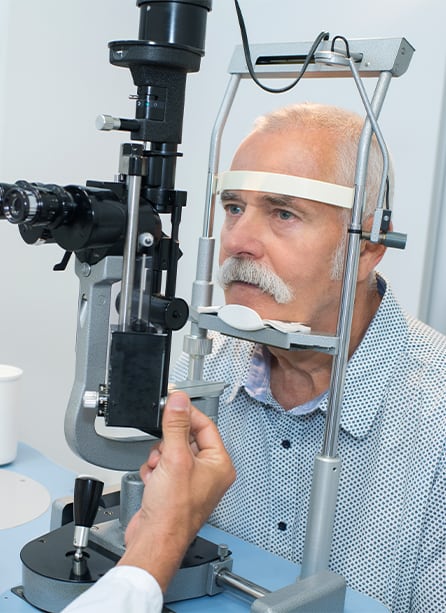

How Diabetes Affects Your Vision
Someone with diabetes cannot produce insulin or effectively use insulin, which typically regulates the body’s blood sugar levels. Blood sugar can build up and cause problems throughout the body, including your eyes.
High amounts of blood sugar can damage your retina, causing vision problems and potentially leading to severe vision loss.
Diabetes-Related Eye Conditions
Diabetes can significantly affect your vision. When your blood sugar is too high for long periods, damage can occur to the delicate blood vessels in the retina, an essential component of your sight. There is a risk of developing diabetic eye diseases, potentially leading to blindness.
Diabetic Retinopathy
Diabetic retinopathy occurs when diabetes damages the blood vessels, leading to blurry, distorted vision and potential blindness. This disease has 2 stages: nonproliferative and proliferative diabetic retinopathy.
As blood vessels in the retina become damaged, they can close off; as a result, new, abnormal blood vessels grow. These weak blood vessels can bleed into the retina and develop scar tissue.
Diabetic Macular Edema
Diabetic macular edema is a complication of diabetic retinopathy and a common cause of vision loss for people with diabetes. Leaking fluid caused by diabetic retinopathy can cause the macula to swell, leading to potential vision loss.
Eye Exam Frequency
The frequency of eye exams can vary from person to person. According to the American Diabetes Association, adults with type 2 diabetes should receive their first examination after their diagnosis. Anyone with type 1 diabetes should have their first eye exam within 5 years of diagnosis.
Annual exams are ideal for anyone with diabetes, but we may want to see you more frequently. Everyone’s eye health is unique, and our optometric physicians will recommend an appropriate examination schedule for your needs.
Center For Sight Can Help Preserve Your Vision
Diabetes can affect many aspects of your health, including your vision. With the expertise of the physicians at Center For Sight, we can help protect your eye health and offer recommendations for how you can manage your diabetes. Book an appointment and see how we can support your overall health.

Our Locations








News
Are Flashing Lights and Blind Spots Signs of a Retinal Tear?
Eye Care, Retina TreatmentReviewed By: Dr. Tanuj Banker Sudden flashes of light, new floaters, or changes in peripheral vision can be symptoms of a retinal tear. A dark curtain, shadow, or new blind spot may mean the retina has started to detach and needs immediate attention. Because these symptoms can overlap with less serious eye changes, a dilated eye […]
Read More… from Are Flashing Lights and Blind Spots Signs of a Retinal Tear?
LASIK vs EVO ICL: Which Vision Correction Procedure Is Right for You?
Eye Care, LASIKLASIK reshapes the cornea with a laser, while EVO ICL surgery places a prescription lens inside the eye without removing corneal tissue. LASIK can correct nearsightedness, farsightedness, and astigmatism in appropriate candidates. EVO ICL is designed for nearsightedness with or without astigmatism and may be an option for people with higher prescriptions or certain corneal […]
Read More… from LASIK vs EVO ICL: Which Vision Correction Procedure Is Right for You?
Why Do Cataracts Cause Faded Colors and Night Vision Problems?
Cataract Surgery, Eye CareReviewed By: Dr. Joshua Kim Cataracts can make colors look faded and night vision feel harder because the eye’s natural lens becomes cloudy over time. As the lens clouds or yellows, it changes the way light passes through the eye. Colors may look duller, glare may feel stronger, and headlights or streetlights may become harder to […]
Read More… from Why Do Cataracts Cause Faded Colors and Night Vision Problems?
Are Flashing Lights and Blind Spots Signs of a Retinal Tear?

Reviewed By: Dr. Tanuj Banker Sudden flashes of light, new floaters, or changes in peripheral vision can be symptoms of a retinal tear. A dark curtain, shadow, or new blind spot may mean the retina has started to detach and needs immediate attention. Because these symptoms can overlap with less serious eye changes, a dilated eye […]
Read More… from Are Flashing Lights and Blind Spots Signs of a Retinal Tear?
LASIK vs EVO ICL: Which Vision Correction Procedure Is Right for You?
LASIK reshapes the cornea with a laser, while EVO ICL surgery places a prescription lens inside the eye without removing corneal tissue. LASIK can correct nearsightedness, farsightedness, and astigmatism in appropriate candidates. EVO ICL is designed for nearsightedness with or without astigmatism and may be an option for people with higher prescriptions or certain corneal […]
Read More… from LASIK vs EVO ICL: Which Vision Correction Procedure Is Right for You?
Why Do Cataracts Cause Faded Colors and Night Vision Problems?
Reviewed By: Dr. Joshua Kim Cataracts can make colors look faded and night vision feel harder because the eye’s natural lens becomes cloudy over time. As the lens clouds or yellows, it changes the way light passes through the eye. Colors may look duller, glare may feel stronger, and headlights or streetlights may become harder to […]
Read More… from Why Do Cataracts Cause Faded Colors and Night Vision Problems?
Check Us Out On Social.


We are a proud partner of US Eye, a leading group of patient-centric, vertically integrated multi-specialty physician practices providing patients with care in ophthalmology, optometry, dermatology and cosmetic facial surgery.

- Physicians
- Ophthalmologists
- Optometrists
- Dermatologists
- Locations
- Sarasota
- Siesta
- Pelican Plaza
- University Park
- Jacaranda
- Venice
-
Sarasota
- 2601 S. Tamiami Trail
- Sarasota, FL 34239
-
P: 941-925-2020
-
Siesta
- 1800 Siesta Dr.
- Sarasota, FL 34239
-
P: 941-241-5973
-
University Park
- 5409 University Pkwy
- Bradenton, FL 34201
-
P: 941-330-2020
-
Pelican Plaza
- 8224 S Tamiami Trail
- Sarasota, FL 34238
-
P: 941-918-2020
-
Jacaranda
- 1236 Jacaranda Blvd
- Venice, FL 34292
-
P: 941-499-3542
-
Venice
- 1360 E Venice Ave
- Venice, Fl 34285
-
P: 941-486-2020
-
Amara Aesthetic Surgery & Dermatology
- 1370 E Venice Ave #205
- Venice, FL 34285
-
P: 941-263-4799
-
Englewood
- 1800 S McCall Rd
- Englewood, Fl 34223
-
P: 941-474-2020
-
Port Charlotte
- 970 Kings Highway, suite 2
- Port Charlotte, FL 33980
-
P: 941-499-7863
-
North Port
- 14844 Tamiami Trail
- North Port, FL 34287
-
P: 941-484-2020
-
Fort Myers – San Carlos Blvd
- 15661 San Carlos Blvd Unit #4
- Fort Myers, FL 33908
-
P: 239-766-7136
-
Fort Myers – Brantley Road
- 1537 Brantley Rd
- Fort Myers, FL 33907
-
P: 239-481-7799
-
Naples
- 700 Neapolitan Way
- Naples, FL 34103
-
P: 239-310-2020
- Follow Us
-
-


