


Reviewed By: Dr. Joshua Kim
Table of Contents
Cataracts can make colors look faded and night vision feel harder because the eye’s natural lens becomes cloudy over time. As the lens clouds or yellows, it changes the way light passes through the eye. Colors may look duller, glare may feel stronger, and headlights or streetlights may become harder to tolerate.
These changes often develop gradually. Many people adjust without realizing how much their vision has changed until everyday tasks, especially night driving, become more difficult. This guide explains the connection between cataracts and night vision, why colors may look less vivid, and when it may be time to talk with an eye care doctor in Florida about cataract treatment.
What Happens to the Eye’s Lens When Cataracts Form?
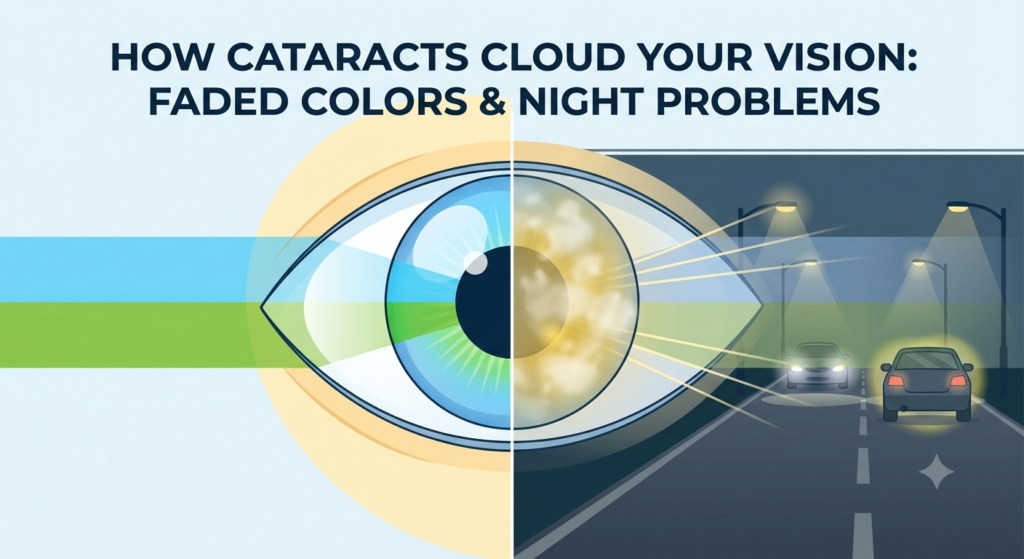
A cataract forms when the normally clear lens inside the eye becomes cloudy. The lens helps focus light onto the retina, so any clouding can affect how clearly and accurately you see.
The Lens Becomes Cloudy
As cataracts develop, proteins in the lens begin to break down and clump together. That clouding can make vision look blurry, hazy, or dim, almost like looking through a dirty window.
The Lens May Also Yellow
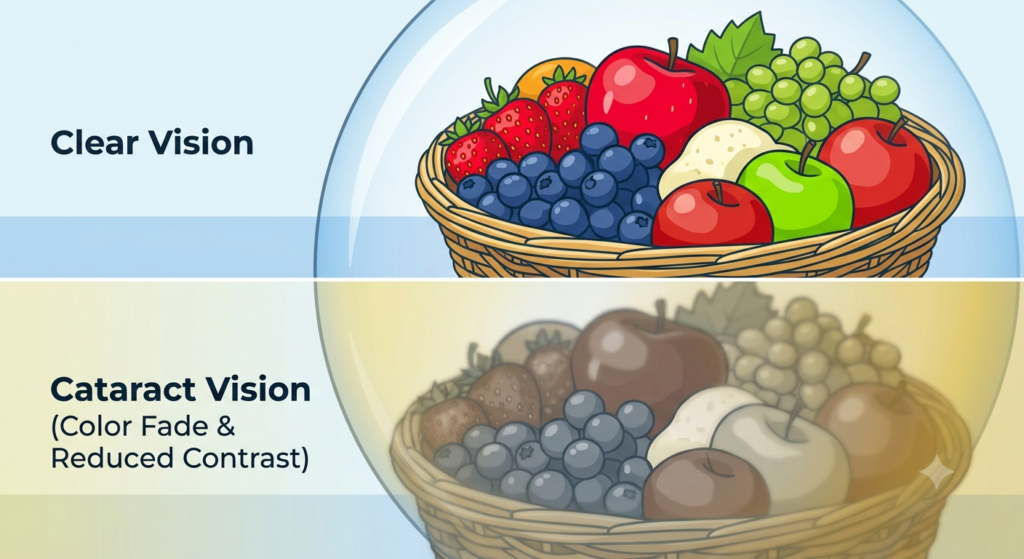
Some cataracts cause the lens to take on a yellow or brown tint. That tint can affect color perception, especially blues, purples, and cooler tones. Whites may look warmer or duller, and bright colors may seem muted.
Quick Fact: Cataracts usually develop slowly. Because the change is gradual, many people do not realize how much their vision has shifted until they compare it with clearer vision after treatment.
Why Do Cataracts Make Colors Look Faded?
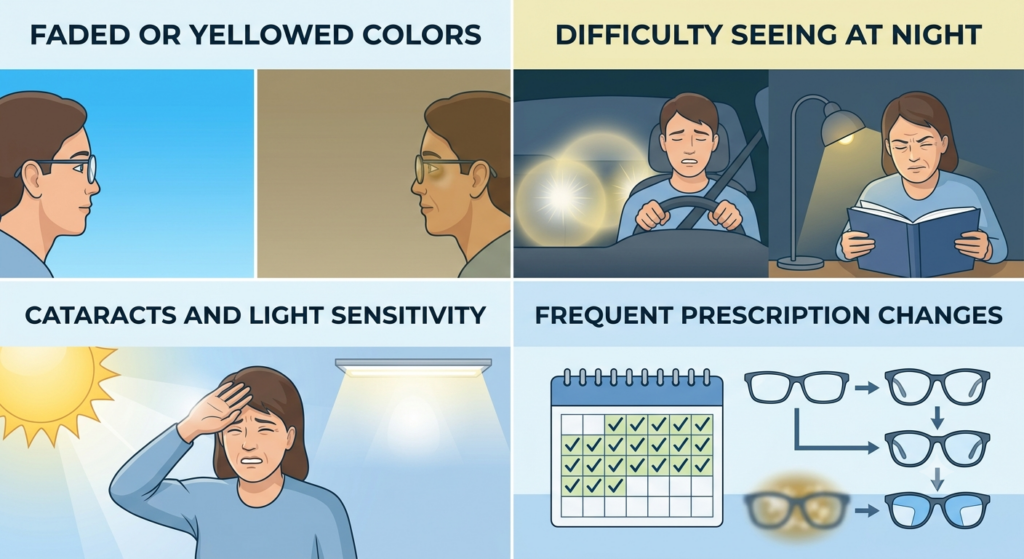
Cataracts can make colors look faded because the cloudy or yellowed lens changes how light reaches the retina. The eye still receives light, but that light is filtered and scattered before the brain interprets the image.
Yellowing Can Change Color Perception
A yellowed lens can reduce the brightness of certain colors. Blues and purples may look gray, white objects may seem yellowish, and the overall visual world may feel less vivid.
This is one reason some patients describe cataracts as making everything look dull. The change may be subtle at first, then more noticeable over time.
Clouding Reduces Contrast
Cataracts can also reduce contrast, the ability to distinguish one object from the surrounding background. When contrast drops, colors and edges may look less defined.
This can affect daily tasks such as reading, cooking, choosing clothing, recognizing faces, or seeing curbs and steps in low light.
Why Do Cataracts Make Night Vision Worse?
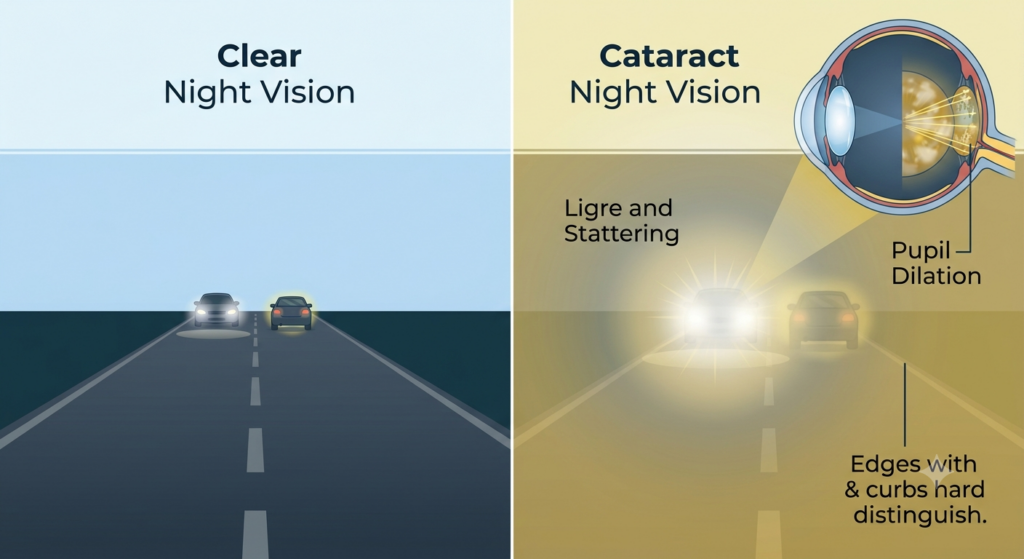
Cataracts and night vision problems are closely connected because the eye has less available light to work with after dark. A cloudy lens scatters that limited light instead of focusing it cleanly on the retina, making glare, blur, and reduced contrast more noticeable.
Increased Light Scatter and Glare
A healthy lens helps direct light toward the retina in a focused way. When cataracts cloud the lens, light can scatter in multiple directions. Bright sources such as headlights and streetlights may then produce glare, halos, or starburst patterns that partially obscure the road or surrounding objects.
This is why difficulty seeing at night may be most noticeable while driving, particularly when facing oncoming traffic or moving between brightly lit and dark areas. Glare, halos, poor night vision, and reduced contrast are all recognized cataract symptoms.
Pupil Dilation Can Amplify the Problem
The pupil naturally enlarges in dim conditions to allow more light into the eye. Depending on the location and type of cataract, that wider opening may allow light to pass through a broader area of the cloudy or irregular lens.
Instead of producing a clearer image, the additional light may create more scatter, blur, and visual discomfort. This can make cataract symptoms feel more pronounced on dark roads, in dim restaurants, or when entering a poorly lit room.
Reduced Contrast Sensitivity
Night vision depends on more than reading small letters clearly. It also requires contrast sensitivity, which allows you to distinguish an object from its background.
When cataracts reduce contrast, dark clothing may blend into the surrounding environment, lane markings may become less distinct, and steps, curbs, pedestrians, or objects in shadow may be harder to see. Someone can therefore experience meaningful night-driving difficulty even when their vision still appears relatively strong on a standard eye chart. Cataracts are associated with both decreased contrast sensitivity and difficulty seeing in low-light conditions.
Tip: If glare or reduced night vision is affecting your confidence behind the wheel, avoid waiting until driving feels unsafe. A comprehensive eye exam can determine whether cataracts or another eye condition is contributing to the change.
Cataract Eye Symptoms That Often Appear Together
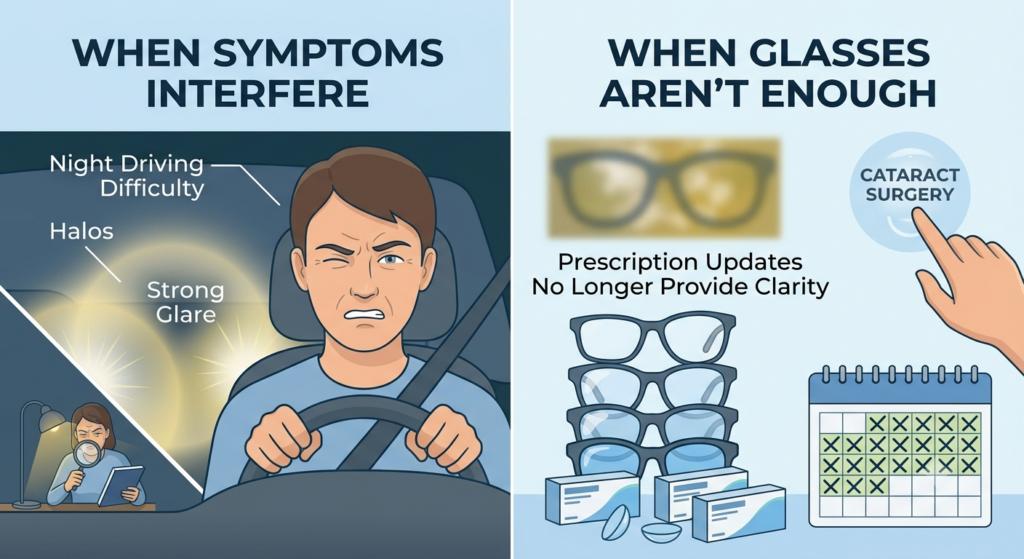
Cataract eye symptoms can overlap. Many patients notice more than one change before scheduling an exam.
Faded or Yellowed Colors
Colors may look dull, less bright, or slightly yellowed. This change may be easiest to notice when comparing whites, blues, or outdoor scenery.
Difficulty Seeing at Night
Trouble driving at night, needing more light to read, or feeling less confident in dimly lit restaurants or hallways can all be related to cataracts.
Cataracts and Light Sensitivity
Cataracts and light sensitivity often go together because the cloudy lens scatters light. Sunlight, headlights, and bright indoor lighting may feel more uncomfortable than they used to.
Frequent Prescription Changes
Some people notice that their glasses or contact lens prescription changes more often. Updated lenses may help for a while, but they cannot remove the cataract itself.
Are Faded Colors and Night Vision Problems Always Cataracts?
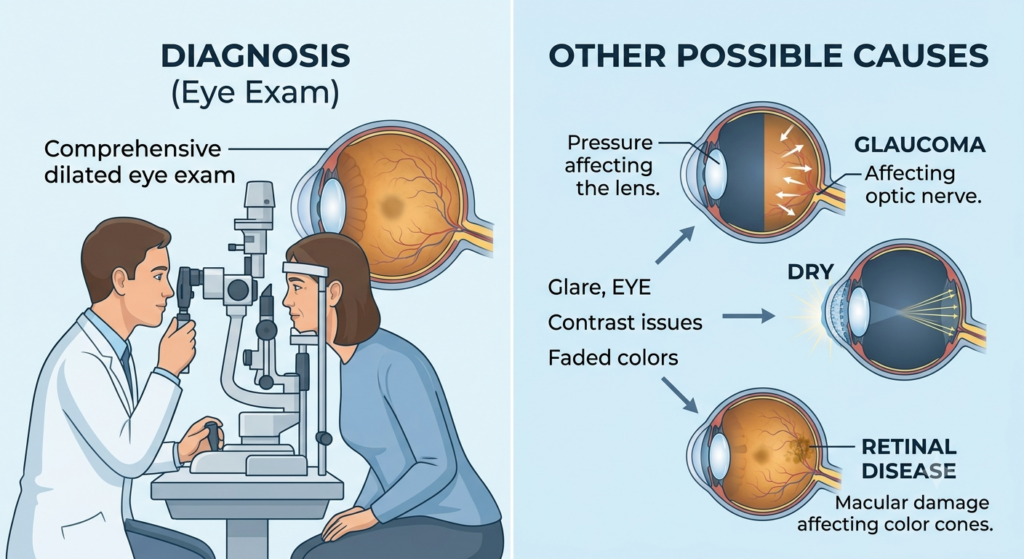
Cataracts can cause faded colors and night vision problems, but they can also be related to other eye conditions. That is why an eye exam matters.
Other Possible Causes
Dry eye, glaucoma, retinal conditions, diabetic eye disease, corneal issues, and certain prescription changes can also affect glare, contrast, or night vision. Some medication side effects may also change how your eyes respond to light.
Why Diagnosis Matters
A cataract evaluation allows your eye doctor to assess the lens, retina, cornea, intraocular pressure, and overall eye health. The goal is to confirm the cause of your symptoms before recommending treatment.
When Should You Consider Cataract Treatment?
Cataract treatment is usually considered when symptoms begin interfering with daily life. The decision is based on how cataracts affect your function, not only on how they look during an exam.
Daily Activities Are Getting Harder
Cataracts may be ready for treatment if you are struggling with night driving, reading, watching television, working on a computer, recognizing faces, or seeing clearly in bright or dim light.
Glasses Are No Longer Enough
Early cataract symptoms may sometimes be managed with stronger lighting, updated glasses, or anti-glare lenses. As cataracts progress, those changes may no longer help enough.
At that point, cataract surgery may be the most effective way to restore clearer vision.
How Cataract Surgery Can Help
Cataract surgery removes the cloudy natural lens and replaces it with a clear artificial lens, called an intraocular lens, or IOL. This allows light to pass through the eye more clearly again.
Color and Contrast May Improve
Many patients notice brighter colors and better contrast after cataract surgery. Whites may look cleaner, colors may seem more vivid, and glare may become easier to manage.
Lens Options Can Be Personalized
Different IOL options may support different visual goals. Some patients want strong distance vision, while others may want greater range across near, intermediate, and distance distances.
Center For Sight offers Cataracts Treatment options, including manual and laser cataract surgery. Your surgeon can evaluate your eyes and help you understand which approach fits your needs.
Key Takeaways
- Cataracts can make colors look faded because the lens becomes cloudy or yellowed.
- Cataracts and night vision problems are linked because cloudy lenses scatter light and reduce contrast.
- Difficulty seeing at night, glare, halos, faded colors, and light sensitivity are common cataract eye symptoms.
- Updated glasses may help early on, but they cannot remove a cataract.
- A comprehensive eye exam can confirm whether cataracts are causing your symptoms.
- Cataract surgery replaces the cloudy lens with a clear artificial lens.
Frequently Asked Questions
Should I schedule a cataract evaluation before night driving feels unsafe?
Yes. You do not need to wait until night driving feels dangerous to schedule an exam. If glare, halos, faded colors, or low-light vision are starting to affect your confidence, an evaluation can help determine whether cataracts are the cause and whether treatment should be discussed.
Will cataract surgery make colors look different right away?
Many patients notice brighter, clearer colors after cataract surgery, but the timing can vary. Some people notice the change quickly, while others become more aware of it as the eye heals and vision settles.
Can I choose an intraocular lens that supports night vision?
Your surgeon can discuss lens options based on your eye health, lifestyle, and visual goals. Some lens choices may be better suited for patients who drive often at night or want strong distance vision, while others may prioritize a broader range of focus. The right option depends on your exam and personal needs.
What should I track before my cataract appointment?
Pay attention to when symptoms appear and which activities are affected. Note whether night driving, reading in dim light, seeing colors accurately, handling glare, or recognizing faces has become harder. These details help your eye doctor understand how cataracts are affecting your daily life.
Conclusion
Cataracts can affect much more than the sharpness of your vision. By clouding or yellowing the natural lens, they can make colors appear faded, reduce contrast, increase sensitivity to light, and make nighttime environments more difficult to navigate. These changes often develop gradually, which can make them easy to dismiss until they begin interfering with driving, reading, or other daily activities.
An eye exam can determine whether cataracts are responsible for these symptoms and rule out other conditions that may also affect color perception, glare, or night vision. Cataract treatment is generally considered when the changes begin affecting daily function, comfort, or independence.
Schedule a Cataract Evaluation at Center For Sight
If faded colors, halos, glare, or difficulty seeing at night are affecting your daily life, schedule a cataract evaluation with Center For Sight. An eye care doctor can examine your lenses, assess your overall eye health, and explain whether monitoring, an updated prescription, or Cataracts Treatment may be appropriate.
Schedule a cataract evaluation to Center For Sight’s official appointment page and retain the existing internal link from Cataracts Treatment to the laser cataract surgery service page. Center For Sight’s appointment page allows patients to request a visit and select from its Florida locations.
Disclaimer: The information provided in this article is for general educational purposes only and should not be considered medical advice. Please consult a qualified ophthalmologist or eye care professional for personalized diagnosis and treatment options tailored to your specific needs.
About Center For Sight
Center For Sight provides ophthalmology, optometry, dermatology and cosmetic surgery services to patients in Southwest Florida. The practice offers patients convenient access to nationally renowned surgeons, highly-trained, compassionate staff members and cutting-edge technology. Center For Sight’s mission is to “bring clear vision to life” through trusting relationships and the unending pursuit of excellence in eye care. For additional information and locations, visit CenterForSight.net.
About Center For Sight Foundation
The Center For Sight Foundation is a donor-advised fund maintained and operated by the Gulf Coast Community Foundation, a section 501(c)(3) organization. The fund is composed of contributions made by individual donors. David W. Shoemaker, M.D., established the Center For Sight Foundation to support the annual Mission Cataract program, which restores vision at no cost for people living at the poverty level suffering vision loss due to cataracts. For more information, visit CFSFoundation.org.