


Reviewed By: Dr. Tanuj Banker
Table of Contents
Dry eyes after LASIK are common because the procedure temporarily affects corneal nerves involved in tear sensation and tear-film regulation. For many patients, symptoms improve as the eyes heal, although pre-existing dry eye can increase the risk of more noticeable or longer-lasting symptoms. Evaluating the ocular surface before surgery and following the recommended eye-drop routine afterward can help make recovery more comfortable.
Why Can LASIK Cause Dry Eye?
LASIK reshapes the cornea to correct refractive errors such as nearsightedness, farsightedness, and astigmatism. Creating the corneal flap and reshaping the underlying tissue can temporarily affect nerves that sense dryness and regulate the tear film.
How LASIK Affects the Tear Film
Reduced corneal sensitivity after surgery can change the normal feedback between the eye and the tear-producing system. Some patients may notice burning, grittiness, fluctuating vision, or a sensation that something is in the eye.
The FDA notes that LASIK can cause dry eye or worsen existing dryness, sometimes affecting visual quality as well as comfort.
This temporary change in corneal sensation is a main reason LASIK dry eye syndrome can develop during recovery.
How Long Can Dry Eyes After LASIK Last?
There is no single recovery timeline. Dryness is often most noticeable earlier in healing and gradually becomes less bothersome as corneal sensation and the ocular surface recover.
Current ophthalmology guidance indicates that symptoms commonly improve over the following months, although a smaller proportion of patients may continue to experience dryness for longer.
Persistent symptoms deserve follow-up rather than simply waiting for them to disappear.
Can You Have LASIK If You Already Have Dry Eye?
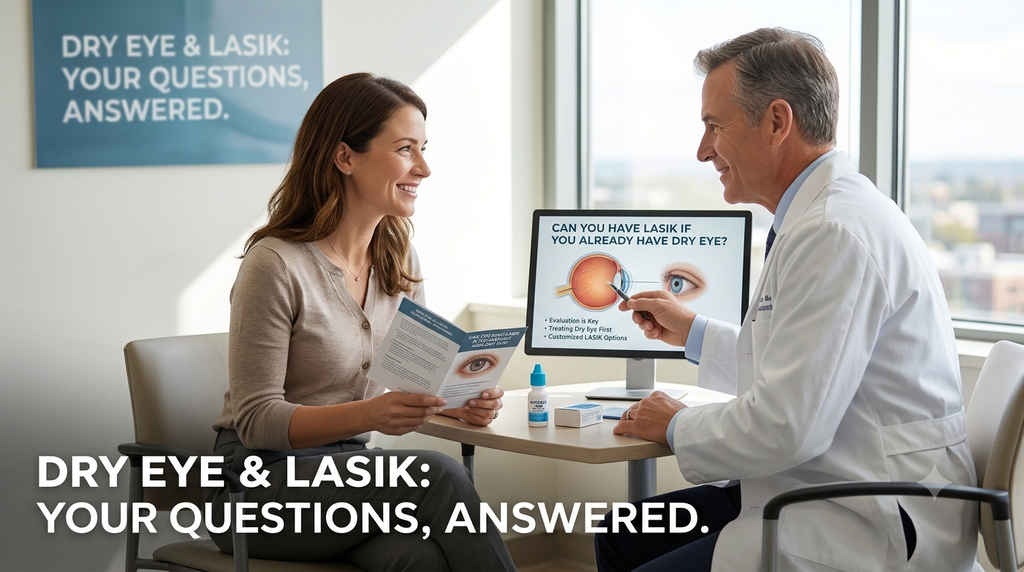
Existing dry eye is an important part of a LASIK evaluation because surgery can temporarily make an unstable ocular surface more symptomatic.
Having dry eye before LASIK surgery does not automatically mean you cannot have the procedure. The severity of the condition and how well it responds to treatment help determine whether LASIK is appropriate.
How Dry Eye Affects LASIK Candidacy
A comprehensive evaluation may include assessing the tear film, corneal surface, eyelids, and meibomian glands. Your doctor will also ask about symptoms, medications, and health conditions that may contribute to dryness.
The American Academy of Ophthalmology identifies severe dry eye as one condition that can make someone a poor candidate for LASIK.
For some patients, treating dry eye first may improve LASIK candidacy. Others may be better suited to a different vision-correction approach.
Treating Dry Eye Before Surgery
Treatment depends on the underlying cause. Some patients may use preservative-free artificial tears or treatment for eyelid and meibomian gland problems. Prescription medication or punctal plugs may be considered when appropriate.
The goal is to get the ocular surface as healthy and stable as possible before the final surgical evaluation.
Tip: Tell your LASIK surgeon about any history of burning, fluctuating vision, frequent artificial-tear use, or contact-lens intolerance, even if you have never been formally diagnosed with dry eye.
Managing LASIK Dry Eye Syndrome After Surgery

Always follow your surgeon’s postoperative plan. Your lubrication needs can change throughout recovery.
What Are the Best Eye Drops After LASIK?
For many patients, preservative-free artificial tears are an important part of early recovery. Lubricating drops can help relieve dryness while the ocular surface heals.
The best eye drops after LASIK are still the ones recommended for your individual eyes. Your surgeon may also prescribe antibiotic or anti-inflammatory drops after surgery, but they serve a different purpose and should be used as directed.
Avoid adding new prescription medications or over-the-counter redness-relief drops without asking your eye doctor first.
Habits That May Help With Comfort
Follow all eye-protection instructions and avoid rubbing your eyes while they heal.
Screen use can also make dryness feel more noticeable because people tend to blink less completely while concentrating on digital devices. Taking regular breaks and remembering to blink can help maintain the tear film.
Direct airflow from fans or air-conditioning may also worsen symptoms for some patients.
Is Dry Eye After LASIK Permanent?

For most patients, dry eye symptoms improve during healing. However, persistent dry eye can occur.
The FDA specifically warns that severe dry eye after LASIK can sometimes become chronic and require ongoing treatment.
So, is dry eye after LASIK permanent? Usually, symptoms improve, but no surgeon can guarantee that every patient’s dryness will completely resolve. This is one reason careful screening before surgery matters.
When Should You Contact Your Eye Doctor?
Contact your LASIK surgeon if symptoms worsen instead of improving, or if dryness interferes with vision despite following the recommended treatment plan.
Significant pain, worsening redness, unusual discharge, or a sudden vision change should also be evaluated promptly.
Key Takeaways
- Dry eyes after LASIK are common because the procedure temporarily affects corneal sensation and tear-film regulation.
- Evaluate dry eye before LASIK surgery to determine candidacy.
- Severe or poorly controlled dry eye may require treatment before surgery or consideration of another vision-correction option.
- Preservative-free artificial tears are commonly used after LASIK, but your surgeon should determine the appropriate drop routine.
- Discuss persistent or worsening symptoms with your eye doctor.
Conclusion
Dry eye is an important consideration both before LASIK and during recovery. Evaluating the ocular surface beforehand helps your surgeon determine whether the procedure is appropriate and whether to treat existing dryness first.
After LASIK Eye Surgery, temporary dryness can usually be managed with appropriate postoperative care. Regular follow-up appointments also let your doctor identify symptoms that need additional treatment, rather than assuming they are simply part of normal healing.
Frequently Asked Questions
Can Dry Eye Affect LASIK Measurements?
Yes. An unstable tear film can make corneal surface measurements less consistent. Treating significant dryness before final measurements helps give the surgical team a more reliable view of the eye.
Can I Use Regular Redness-Relief Drops After LASIK?
Don’t use redness-relief drops unless your surgeon recommends them. These products work differently from lubricating artificial tears and may not be appropriate during LASIK recovery.
Does Screen Time Worsen LASIK Dry Eye Syndrome?
Screen use can make symptoms more noticeable because prolonged concentration often reduces normal blinking. Taking breaks and blinking fully may help limit tear evaporation.
Can I Wear Contact Lenses if My LASIK Surgery Is Delayed Because of Dry Eye?
Possibly, but follow your eye doctor’s instructions. Contact lenses can affect both the ocular surface and corneal measurements, so your doctor may ask you to stop wearing them for a period before another LASIK evaluation.
Schedule a LASIK Consultation
If you are considering LASIK Eye Surgery, Center For Sight can evaluate your vision, corneal health, and ocular surface to determine whether LASIK may be appropriate.
If you are looking for an eye care doctor in Florida to discuss dry eye and LASIK candidacy, schedule a consultation with Center For Sight to learn more about your options.
About Center For Sight
Center For Sight provides ophthalmology, optometry, dermatology and cosmetic surgery services to patients in Southwest Florida. The practice offers patients convenient access to nationally renowned surgeons, highly-trained, compassionate staff members and cutting-edge technology. Center For Sight’s mission is to “bring clear vision to life” through trusting relationships and the unending pursuit of excellence in eye care. For additional information and locations, visit CenterForSight.net.
About Center For Sight Foundation
The Center For Sight Foundation is a donor-advised fund maintained and operated by the Gulf Coast Community Foundation, a section 501(c)(3) organization. The fund is composed of contributions made by individual donors. David W. Shoemaker, M.D., established the Center For Sight Foundation to support the annual Mission Cataract program, which restores vision at no cost for people living at the poverty level suffering vision loss due to cataracts. For more information, visit CFSFoundation.org.