


Reviewed By: Dr. Tanuj Banker
Table of Contents
Sudden flashes of light, new floaters, or changes in peripheral vision can be symptoms of a retinal tear. A dark curtain, shadow, or new blind spot may mean the retina has started to detach and needs immediate attention. Because these symptoms can overlap with less serious eye changes, a dilated eye exam is the best way to determine the cause.
Seeing a sudden flash of light in the corner of your eye can be unsettling. So can noticing new specks, cobweb-like shapes, or an area of vision that suddenly seems darker than it should.
These changes don’t always mean you have a retinal tear. Some occur when the gel inside the eye naturally changes with age. The problem is that the same process can sometimes pull hard enough on the retina to create a tear.
Knowing the signs of a retinal tear can help you recognize when a change in your vision deserves prompt attention.
What Causes Flashing Lights in Your Vision?
Flashing lights often begin with changes in the vitreous, the clear gel that fills the inside of the eye. As you age, the vitreous becomes more liquid and may eventually pull away from the retina. This is known as posterior vitreous detachment, or PVD.
PVD is common and often doesn’t cause lasting problems. However, the vitreous can sometimes pull firmly on the retina as it separates.
Why Does PVD Cause Flashes?
When the vitreous tugs on the retina, the retina can produce the sensation of light even though no light is actually entering the eye.
These flashes may look like streaks, sparks, or brief bursts of light, often along the side of your vision. They may be easier to notice in a dark room or at night.
Do Flashing Lights Always Mean You Have a Retinal Tear?
No. Flashes can occur during an uncomplicated PVD (does not require treatment) and may gradually become less noticeable.
New or suddenly increasing flashes should still be evaluated. In some cases, the pulling that causes the flashes can also create a break or tear in the retina. Nearsightedness, previous eye surgery, and eye trauma can also increase the likelihood of vitreous and retinal problems.
Are Floaters and Blind Spots Symptoms of a Retinal Tear?
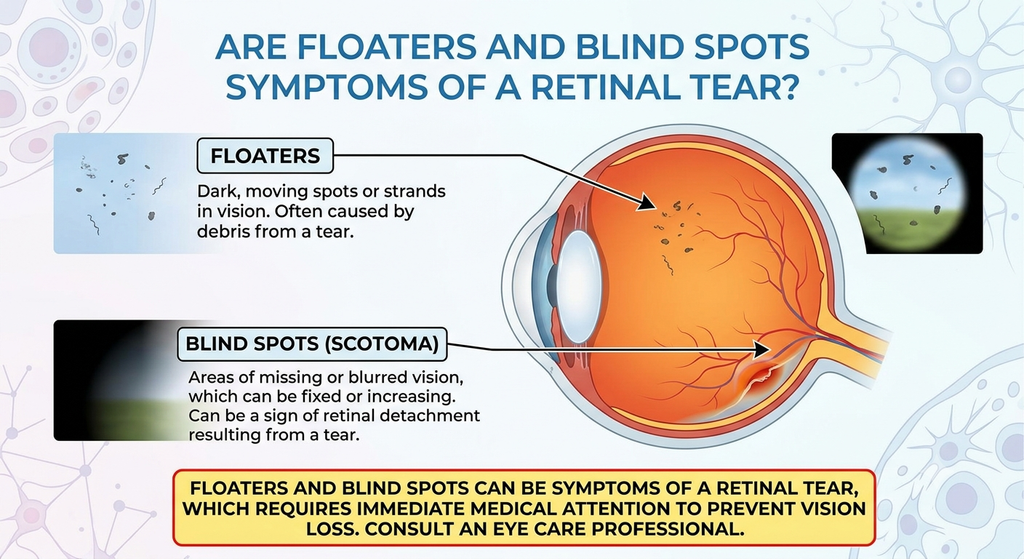
A sudden increase in floaters is another important warning sign. Floaters may look like dots, strands, cobwebs, or small shapes that move when you move your eyes.
A new shower of floaters, combined with flashes, warrants prompt evaluation because it can occur when the vitreous pulls on or tears the retina.
What Do Blind Spots in Vision Mean?
Blind spots in vision need particular attention when they appear suddenly.
A dark shadow, curtain, or missing section of peripheral vision can mean that part of the retina is no longer functioning normally. These symptoms are especially concerning for a retinal detachment, which can develop when fluid passes through a retinal tear and separates the retina from the back of the eye.
Quick Tip: Don’t wait for a curtain or shadow to spread before seeking care. Sudden loss of part of your visual field should be treated as an eye emergency.
What Is the Difference Between a Retinal Tear and Retinal Detachment?
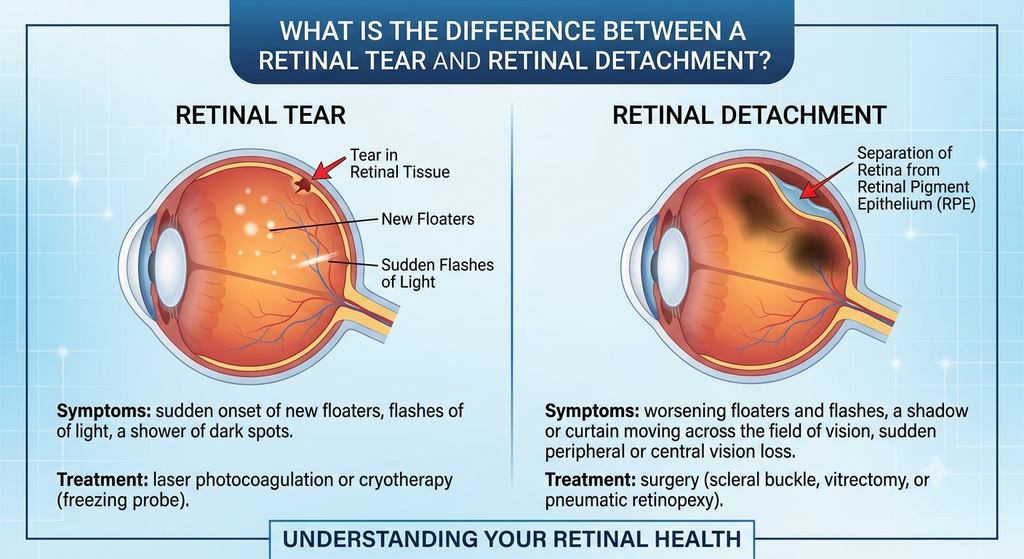
A retinal tear and a retinal detachment are related, but they describe different problems.
A retinal tear is a break or opening in the retina. At this stage, the retina is still largely in its normal position. A retinal detachment occurs when fluid passes underneath the retina and causes it to separate from the tissue beneath it.
Both conditions need prompt evaluation, but a detachment is generally the more advanced and urgent problem because a larger area of the retina may stop functioning normally as it separates.
| Retinal Tear | Retinal Detachment | |
| What happens | A break or opening develops in the retina | The retina separates from its normal position |
| Common symptoms | New flashes, sudden floaters, or sometimes no noticeable symptoms | Flashes, floaters, a dark curtain or shadow, or missing peripheral or central vision |
| Vision loss | May not cause noticeable vision loss when detected early | Can cause partial or significant vision loss depending on how much retina is detached |
| Typical treatment | Some tears may be sealed with laser therapy or cryotherapy | Treatment may require a more extensive retinal procedure or surgery |
| Urgency | Prompt evaluation is important because a tear can progress | Immediate evaluation is needed to help protect remaining vision |
The symptoms can overlap, which is why it is difficult to tell from symptoms alone whether the retina is torn, detached, or unaffected. A dilated retinal exam allows an ophthalmologist or retina specialist to determine what is happening and how urgently treatment is needed.
How Can a Tear Lead to Detachment?
When a retinal tear forms, fluid from inside the eye can sometimes pass through the opening and collect underneath the retina. As that fluid spreads, the retina may begin to separate from the back of the eye.
That progression does not happen with every retinal tear, but it is one reason new flashes and floaters should be evaluated before a curtain, shadow, or missing area of vision develops.
Retinal detachment can cause permanent vision loss if it is not treated promptly. A sudden curtain or shadow, new loss of peripheral vision, or a noticeable area of missing vision warrants immediate eye care.
When Should You See an Eye Doctor?
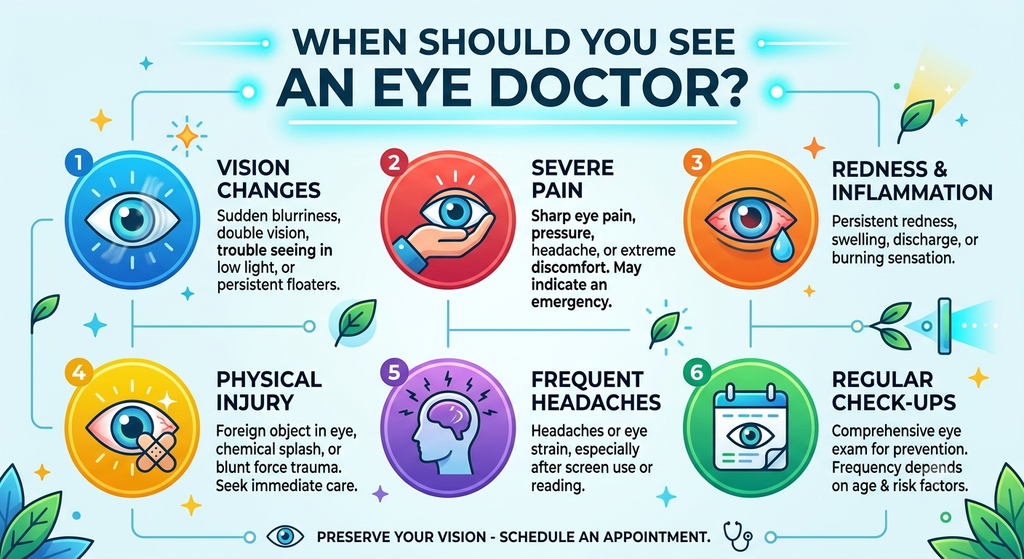
Sudden visual changes are difficult to diagnose based on symptoms alone. A new retinal tear may cause flashes and floaters, while similar symptoms can also occur with a PVD that doesn’t involve a tear.
The safest approach is to contact an eye doctor promptly when symptoms are new or suddenly become more noticeable.
Symptoms That Need Immediate Attention
Seek immediate eye care if you notice:
- A dark curtain or shadow over part of your vision
- Sudden loss of peripheral or central vision
- A large or sudden increase in new floaters
- New flashes accompanied by reduced or blurry vision
The National Eye Institute recommends immediate evaluation for symptoms of retinal detachment because prompt treatment can help protect vision.
New flashes or floaters without obvious vision loss should also be reported to your eye doctor rather than simply watched at home.
How Is a Retinal Tear Diagnosed?
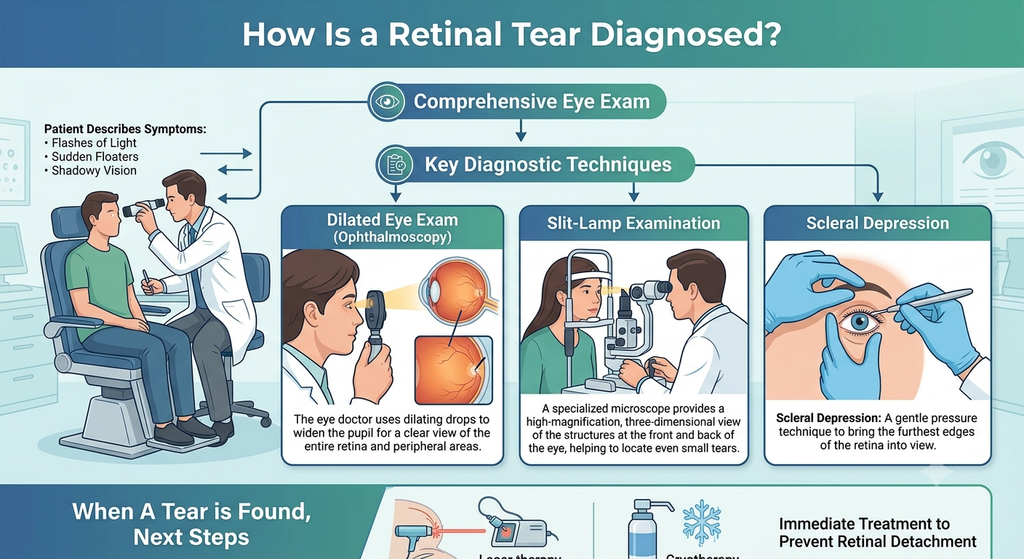
A retinal tear diagnosis usually begins with a dilated eye examination. Dilating drops widen the pupil so an ophthalmologist or retina specialist can examine the retina and look for tears, bleeding, or areas that have begun to detach.
The exam also helps distinguish a retinal problem from other conditions that can cause flashes, floaters, or visual changes.
Are Other Tests Sometimes Needed?
Depending on what the doctor can see during the exam, additional testing may be helpful. Ultrasound or optical coherence tomography may sometimes be used to evaluate the vitreous and retina when the view inside the eye is limited or another retinal condition is suspected.
At Center For Sight, Dr. Tanuj Banker, a vitreoretinal specialist can diagnose and treat retinal conditions, including problems related to PVD, retinal tears, and retinal detachment.
What Happens If a Retinal Tear Is Found?
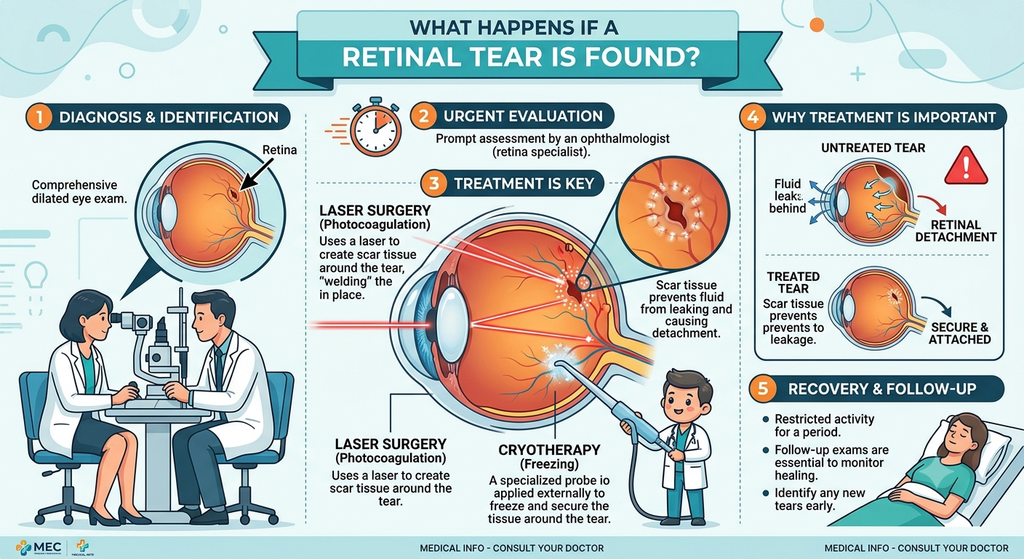
Treatment depends on the location and characteristics of the tear and whether the retina has begun to detach.
Some retinal tears can be treated with laser therapy or cryotherapy. These treatments create a seal around the tear to reduce the risk of fluid passing beneath the retina.
If a retinal detachment has already developed, more extensive treatment may be necessary. Your retina specialist can explain which approach is appropriate after examining the eye.
Key Takeaways
- New flashes and floaters can be symptoms of a retinal tear, particularly when they begin suddenly.
- Posterior vitreous detachment commonly causes flashes and floaters and doesn’t always lead to a retinal tear.
- A dark curtain, shadow, or new blind spot can be a warning sign of retinal detachment.
- A retinal tear can sometimes allow fluid to accumulate beneath the retina and lead to detachment.
- Sudden visual changes should be evaluated promptly with a dilated eye exam.
Frequently Asked Questions
Can Retinal Tear Symptoms Come and Go?
Flashes may be intermittent, especially during a posterior vitreous detachment. Symptoms becoming less noticeable doesn’t confirm that the retina is healthy, so new flashes or floaters should still be discussed with an eye doctor.
Can a Retinal Tear Happen Without Symptoms?
Yes. Some retinal tears don’t cause noticeable symptoms and may be discovered during a dilated retinal examination.
Are You at Higher Risk After Cataract Surgery?
Previous cataract surgery is one factor associated with a higher risk of vitreous changes and retinal detachment. Your individual risk also depends on factors such as age, nearsightedness, previous retinal problems, and eye trauma.
Can You Develop Another Retinal Tear After Treatment?
Yes. Treating one tear doesn’t prevent another tear from developing elsewhere in the retina. Your doctor may recommend follow-up examinations and explain which new symptoms should prompt another urgent evaluation.
Conclusion
Flashing lights and new floaters are often related to changes in the vitreous, but they can also be early signs of a retinal tear. A shadow, curtain, or new area of missing vision raises greater concern that the retina may already be detaching.
Because these symptoms can look similar at first, the safest way to know what is happening is through a dilated eye exam. Prompt evaluation allows your eye doctor to identify a retinal tear before it causes more extensive problems.
Schedule a Retina Evaluation at Center For Sight
If you’ve developed new flashes, a sudden increase in floaters, blind spots in vision, or a shadow across your visual field, contact an eye care doctor in Florida promptly.
Center For Sight’s vitreoretinal specialists provide evaluation and treatment for a range of retina conditions. An ophthalmologist or retina specialist can examine your eyes, determine the cause of the change, and explain whether treatment is needed.
About Center For Sight
Center For Sight provides ophthalmology, optometry, dermatology and cosmetic surgery services to patients in Southwest Florida. The practice offers patients convenient access to nationally renowned surgeons, highly-trained, compassionate staff members and cutting-edge technology. Center For Sight’s mission is to “bring clear vision to life” through trusting relationships and the unending pursuit of excellence in eye care. For additional information and locations, visit CenterForSight.net.
About Center For Sight Foundation
The Center For Sight Foundation is a donor-advised fund maintained and operated by the Gulf Coast Community Foundation, a section 501(c)(3) organization. The fund is composed of contributions made by individual donors. David W. Shoemaker, M.D., established the Center For Sight Foundation to support the annual Mission Cataract program, which restores vision at no cost for people living at the poverty level suffering vision loss due to cataracts. For more information, visit CFSFoundation.org.