

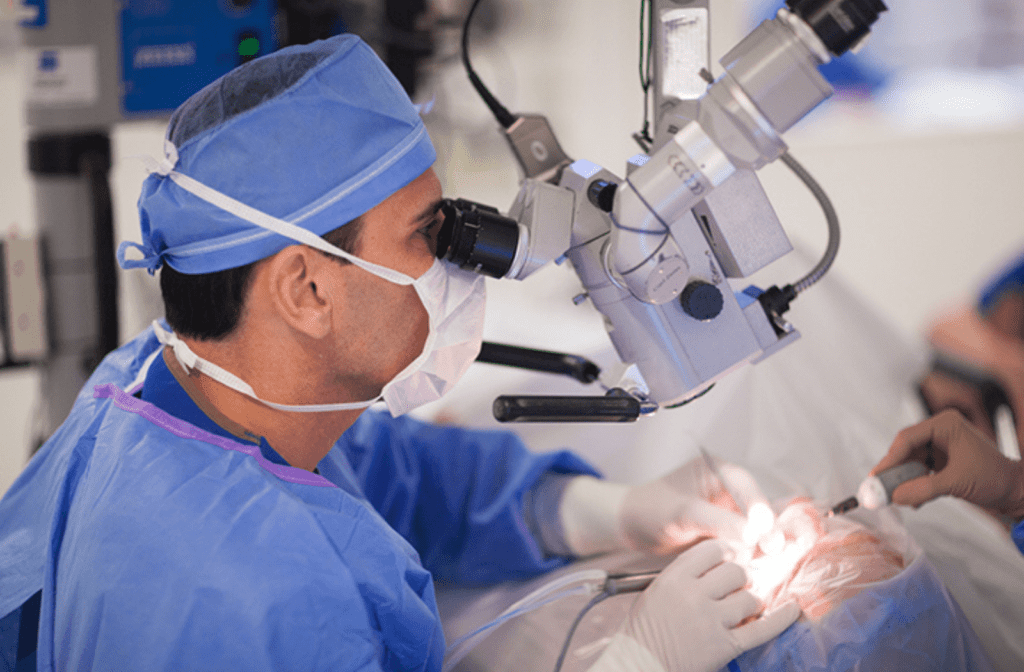
Cataracts develop when the eye’s natural lens becomes cloudy, making it harder for light to pass through clearly. As cataracts progress, they can affect everyday activities such as reading, driving, recognizing faces, or seeing clearly in low light.
Table of Contents
So, how does cataract surgery work? During the procedure, an ophthalmologist removes the cloudy natural lens and replaces it with a clear artificial lens called an intraocular lens (IOL). The surgery is typically performed as an outpatient procedure, allowing most patients to return home the same day.
Cataracts are a common part of aging and often develop gradually. While they are not usually harmful to overall health, they can significantly affect vision quality and independence over time. Cataract surgery is a widely performed procedure that can help restore clearer vision when cataracts begin interfering with daily life.
This guide explains the cataract surgery process, including what happens before surgery, the steps involved during the procedure, lens options, and what to expect during recovery.
What are Cataracts?
Cataracts are the clouding of the normally clear lens of the eye. If cataracts impact your ability to perform daily activities, such as driving or reading, your optometrist may recommend surgery.
When you consider cataract surgery, ask yourself these questions:
- Can I safely do my job?
- Do I struggle to cook, shop, or drive?
- Is my vision affecting my independence?
Cataracts are a natural part of the aging process, but they don’t have to negatively impact your life.
Signs & Symptoms of Cataracts
Signs and symptoms of cataracts include:
- Cloudy, blurry, or dim vision
- Difficulty seeing at night
- Sensitivity to light
- Double vision
- Frequent prescription changes
If you experience any of these symptoms, it may be time to talk to your optometrist about cataract surgery.
Cataract surgery is an operation where your ophthalmologist removes the natural lens of your eye and replaces it with a synthetic lens. This is a generally safe operation.
When Should You Consider Cataract Surgery?
Cataract surgery may be appropriate when changes in your vision begin interfering with everyday life.
Ask yourself:
- Can I drive safely, especially at night?
- Can I read or work comfortably?
- Do I struggle to cook, shop, or use stairs?
- Is glare making bright environments uncomfortable?
- Is my vision reducing my independence?
- Are new glasses no longer improving my vision enough?
An optometrist can identify cataracts and monitor changes in your vision. An ophthalmologist evaluates whether surgery is appropriate and performs the procedure.
Cataracts do not always need to be removed as soon as they are diagnosed. Surgery is generally considered when the benefits of clearer vision outweigh the risks and when the cataract affects activities that are important to the patient.
What Does a Cataract Operation Entail?
Cataract surgery removes the eye’s cloudy natural lens and replaces it with an artificial intraocular lens.
The new IOL remains permanently inside the eye and helps focus light more clearly. Cataracts cannot return because the clouded natural lens has been removed, although some patients may later develop clouding behind the IOL that can be treated separately.
The cataract surgery process includes three main stages:
- Preparing and measuring the eye
- Removing the clouded lens and inserting an IOL
- Protecting the eye while it heals
Before Cataract Surgery
Before surgery, your ophthalmologist will complete an eye examination and take detailed measurements. These measurements help determine the correct power and type of IOL for your eye.
Your surgical team will also review your:
- Current medications
- Medical history
- Previous eye procedures
- Existing eye conditions
- Vision goals
- Insurance coverage
You may be asked to use prescription eye drops before surgery. Your doctor may also give you instructions about eating, drinking, and taking medications before the procedure.
Do not stop taking prescribed medications unless your healthcare provider specifically tells you to do so.
After Cataract Surgery
Your eye may feel itchy, mildly uncomfortable, watery, or sensitive to light after surgery. Vision may also appear blurry while the eye begins healing.
Your ophthalmologist may prescribe eye drops to prevent infection, reduce inflammation, and support healing. You may also be asked to wear a protective eye shield, particularly while sleeping.
Avoid rubbing or pressing on the treated eye. Follow your surgeon’s instructions about showering, bending, lifting, exercise, swimming, eye makeup, and returning to work.
Types of Intraocular Lenses
Different types of intraocular lenses provide different ranges of vision. No IOL can guarantee complete freedom from glasses, and not every lens is appropriate for every patient.
Your ophthalmologist will recommend an IOL based on your eye health, measurements, astigmatism, lifestyle, and visual goals.
Monofocal IOL
A monofocal lens provides clear vision at one primary distance, usually distance vision. Reading glasses or glasses for intermediate tasks may still be required.
Multifocal IOL
A multifocal lens is designed to provide vision at more than one distance. It may reduce dependence on glasses, but some patients may still need glasses for particular tasks.
Extended-Depth-of-Focus IOL
An extended-depth-of-focus, or EDOF, lens provides a continuous range of vision, generally emphasizing distance and intermediate vision. Reading glasses may still be needed for small print or close work.
Toric IOL
A toric lens is designed to correct corneal astigmatism. Toric technology can be incorporated into different lens designs, including some monofocal and broader-range lenses.
Center For Sight Vision Options
During cataract surgery, the cloudy natural lens of the eye is removed and replaced with an artificial lens called an intraocular lens (IOL). The type of IOL you choose can affect your vision after surgery, including how much you may depend on glasses for certain activities.
Center For Sight offers different vision options to help match your lifestyle, visual goals, and eye health. Your surgeon will evaluate your eyes and discuss which option may be most suitable for you.
Advanced Vision
Advanced Vision may provide a broader range of vision from near to far and may reduce dependence on glasses. The treatment plan may include laser cataract surgery, an advanced lens implant, astigmatism treatment, and detailed corneal measurements.
Custom Vision
Custom Vision is designed primarily to improve distance vision while also addressing eligible astigmatism. Glasses are generally still needed for close-up activities.
Center For Sight also offers technologies such as the Light Adjustable Lens in select markets. Lens availability and candidacy depend on the patient’s eye health, prescription, and surgical plan.
The Cataract Surgery Procedure: Step by Step
Learning the cataract surgery steps can make the procedure easier to understand. The exact process may vary depending on whether manual or laser-assisted cataract surgery is performed.
1. The Eye Is Dilated and Numbed
Your care team places drops in the eye to enlarge the pupil. Numbing medicine is used to minimize discomfort.
You may also receive medication to help you relax. Most patients remain awake during the procedure.
2. A Small Incision Is Created
The ophthalmologist makes a small incision near the edge of the cornea. In laser-assisted cataract surgery, some parts of this step may be completed with a femtosecond laser.
3. The Lens Capsule Is Opened
The surgeon creates a small opening in the thin capsule surrounding the natural lens. This provides access to the cataract.
4. The Cataract Is Broken Into Small Pieces
Most cataract surgery uses a technique called phacoemulsification. A thin probe delivers ultrasound energy that breaks the cloudy lens into small fragments.
5. The Clouded Lens Is Removed
The fragmented lens material is gently suctioned from the eye. Part of the lens capsule remains in place to support the new IOL.
6. The IOL Is Inserted
The folded artificial lens is inserted through the small incision. It unfolds inside the eye and is positioned within the remaining lens capsule.
7. The Incision Begins Healing
The incision is usually small enough to heal without stitches. The surgeon checks the eye and IOL position before the patient leaves the surgical facility.
How Long Does Cataract Surgery Take?
The surgical procedure itself often takes less than an hour. However, the full appointment takes longer because it includes check-in, eye preparation, pupil dilation, medication, and monitoring after surgery.
Cataract surgery is generally performed as an outpatient procedure. You will need someone to drive you home because your vision may be blurry and you may have received a sedative.
Cataract Surgery Recovery Time
Many patients notice an improvement in vision within a few days, but cataract surgery recovery takes place gradually.
The First Few Days
Mild irritation, blurry vision, or light sensitivity may occur. The eye often begins feeling better after one or two days.
The First Few Weeks
Vision should continue to improve as the eye heals and adjusts to the new lens. You may need to avoid heavy lifting, bending over, swimming, or touching the eye.
Complete Healing
Complete cataract surgery recovery commonly takes several weeks. The exact healing time depends on your eye health, the type of procedure, and whether any other eye conditions are present.
Attend every scheduled follow-up visit so your ophthalmologist can monitor your healing and determine when your vision is stable enough for a new glasses prescription.
Cataract Surgery Aftercare
Proper cataract surgery aftercare can support healing and reduce the risk of complications.
Follow these instructions unless your ophthalmologist tells you otherwise:
- Use prescription eye drops as directed.
- Avoid rubbing or pressing on the eye.
- Wear the protective shield as instructed.
- Keep soap, dust, and contaminated water away from the eye.
- Avoid heavy lifting and strenuous exercise until cleared.
- Attend every follow-up appointment.
- Ask your doctor when it is safe to drive.
Contact your ophthalmologist promptly if you experience:
- Sudden vision loss
- Severe or persistent pain
- Increasing redness
- Significant eyelid swelling
- Flashes of light
- Multiple new floaters
- A curtain-like shadow in your vision
Cataract Surgery Results
As the eye heals, many patients notice clearer vision, brighter colors, and less glare. Results depend on the health of the eye, the IOL selected, and whether conditions such as glaucoma, macular degeneration, diabetic eye disease, or corneal disease are also present.
Some patients still need glasses after cataract surgery. The need for glasses depends partly on the type of IOL implanted, the intended focusing distance, astigmatism, and how the eye heals.
When cataracts affect both eyes, surgery is usually performed on separate dates. The second procedure is scheduled after the surgeon has evaluated the recovery of the first eye.
How Much Does Cataract Surgery Cost?
Cataract surgery cost varies according to:
- Insurance coverage
- Surgeon and facility fees
- Testing and measurements
- Manual or laser-assisted surgery
- The type of IOL selected
- Astigmatism treatment
- Optional vision-correction technology
In general, cataract surgery costs can range from approximately $3,000 to $6,000 per eye without insurance, depending on the surgeon, facility, location, type of intraocular lens (IOL), and technology used. Insurance and Medicare may cover medically necessary portions of cataract surgery, while premium lenses and advanced options may involve additional out-of-pocket costs.
Because every patient’s needs are different, the Center For Sight team provides a personalized cost estimate after evaluating your eyes, discussing your vision goals, and reviewing your available lens options. Contact our experienced eye care team to learn more about cataract surgery options and pricing.
Does Medicare Cover Cataract Surgery?
Medicare Part B covers eligible cataract surgery and the implantation of a conventional IOL when the procedure is medically necessary.
Under Original Medicare, patients generally pay 20% of the Medicare-approved amount after meeting the Part B deductible. Costs depend on where the procedure is performed, whether the providers accept Medicare assignment, and whether the patient has supplemental insurance.
Medicare Part B may also cover one pair of glasses with standard frames or one set of contact lenses after cataract surgery that implants an IOL. Premium lenses and optional upgrades may not be fully covered.
Confirm your benefits directly with Medicare, your private insurer, and the surgical facility before treatment.
Talk to Your Ophthalmologist
Cataract surgery can restore vision in the majority of patients who get the procedure done. Talk to your ophthalmologist if you experience any symptoms of cataracts. Our team is happy to answer any questions you may have.
FAQ’s
Is cataract surgery painful?
Cataract surgery is generally not painful. You may feel mild discomfort, but local anesthesia ensures a pain-free experience.
How long is the recovery from cataract surgery?
Recovery typically takes 8–12 weeks, with noticeable improvements in vision within a few days
Do I need glasses after cataract surgery?
Depending on the type of intraocular lens (IOL) you choose, you may still need glasses for certain activities.