

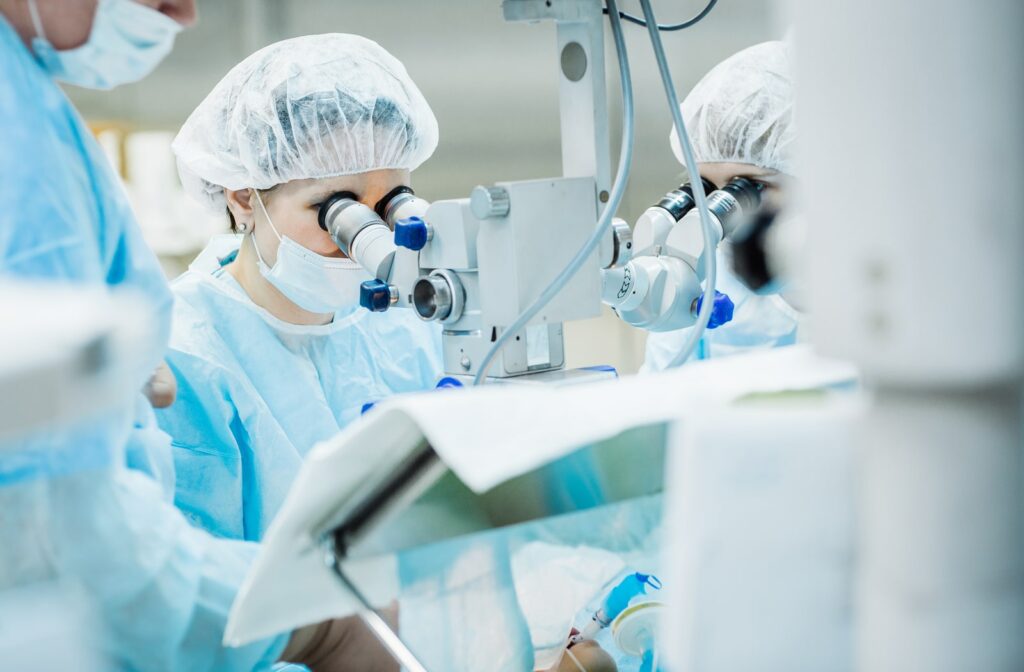
LASIK reshapes the cornea; the clear front surface of the eye, so light focuses more accurately on the retina. It is a type of refractive eye surgery in which an ophthalmologist creates a thin corneal flap, uses an excimer laser to remove microscopic amounts of tissue, and then repositions the flap so it can heal naturally.
Table of Contents
Whether you’re self-conscious about wearing glasses, hate the inconvenience of using contacts, or are curious about how eye surgery works, there are multiple reasons to consider eye surgery for vision correction. As medical science progresses, the options get better and more affordable all the time.
Unfortunately, not everyone can get LASIK because certain things increase the risk of complications. This is why it’s important to get a comprehensive eye exam to ensure the best possible outcome.
After examining your eyes, your eye doctor will offer you their recommendation on whether you’re a candidate for LASIK eye surgery.
What is LASIK?
LASIK, or laser-assisted in situ keratomileusis, is a refractive eye surgery used to correct nearsightedness, farsightedness, and astigmatism. By changing the curvature and focusing power of the cornea, LASIK can reduce a person’s dependence on glasses or contact lenses.
During LASIK, the eye doctor uses a precision cutting laser to reshape the cornea. How the cornea gets reshaped is determined by the issue getting treated.
LASIK is a highly successful procedure—more than 90% of people who undergo the procedure end up with 20/20 or 20/40 vision. However, even with its success, LASIK won’t prevent your eyesight from deteriorating over time from other issues. And you may still need glasses for certain activities.
How Does Laser Eye Surgery Work?
Laser eye surgery, including LASIK, works by reshaping the cornea to correct vision problems such as nearsightedness, farsightedness, and astigmatism. The procedure involves using a precision laser to create a thin flap in the cornea, which is then folded back to access the underlying corneal tissue. The laser reshapes the cornea by removing microscopic amounts of tissue, allowing light to focus correctly on the retina. Once the reshaping is complete, the flap is repositioned, and it heals naturally without the need for stitches. This process is quick, typically taking less than 30 minutes, and is highly effective in improving vision clarity.
LASIK Procedure Steps: What Happens During LASIK?
Understanding the LASIK procedure steps can make the surgery feel less unfamiliar. Although individual treatment plans and technology may vary, LASIK generally follows these steps:
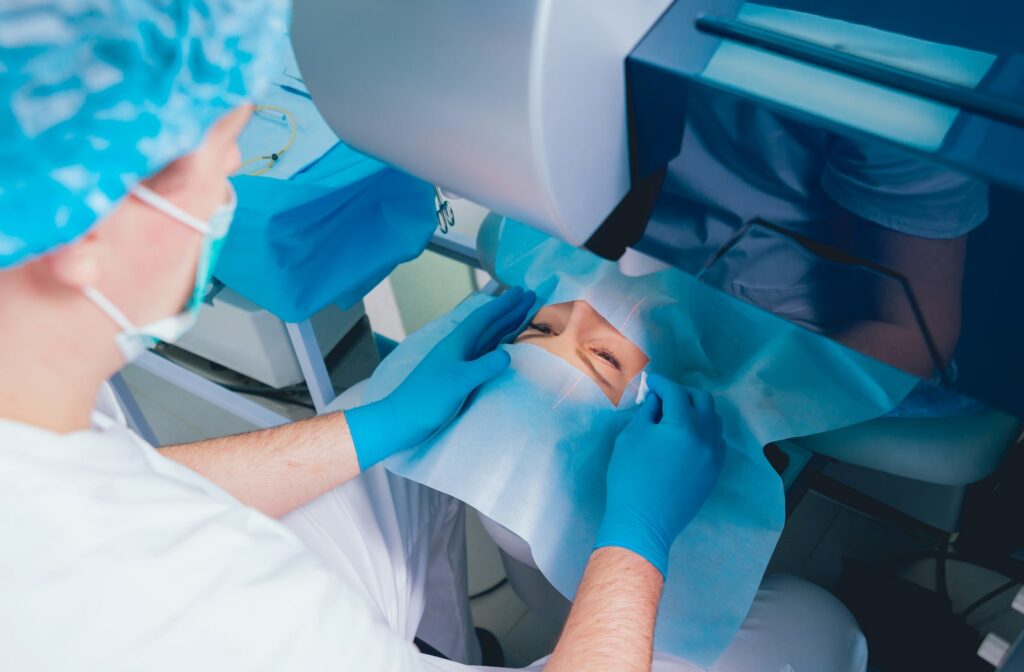
The eye is numbed: The ophthalmologist places numbing drops in the eye. An eyelid holder keeps the eyelids open so you do not need to worry about blinking.
A thin corneal flap is created: Depending on the surgical technique, the ophthalmologist uses a femtosecond laser or a small surgical instrument called a microkeratome to create a thin, hinged flap in the cornea.
The flap is gently lifted: The surgeon folds the flap back to reach the deeper layer of corneal tissue that needs to be reshaped.
The excimer laser reshapes the cornea: A computer-programmed excimer laser removes microscopic amounts of corneal tissue based on measurements taken during the preoperative examination. The reshaping changes how light enters the eye and focuses on the retina.
The corneal flap is repositioned: Once the reshaping is complete, the surgeon carefully returns the flap to its original position.
The flap begins healing naturally: The flap usually remains in place without stitches. The ophthalmologist checks its position before the patient leaves the surgical facility.
The entire LASIK procedure is commonly completed in 30 minutes or less, although the exact time depends on the patient, the treatment plan, and whether one or both eyes are treated.
LASIK Recovery Time, Aftercare, and Healing
LASIK recovery time varies from person to person, but many patients notice clearer vision within the first day or two. The eyes continue healing after the initial improvement, and vision may fluctuate as the cornea stabilizes. Dryness, glare, halos, light sensitivity, or blurry vision may also occur during the early healing period.
The First Few Hours
Your vision may appear blurry or hazy immediately after LASIK. Your eyes may also feel watery, gritty, itchy, or sensitive to light.
Plan to rest your eyes and have someone drive you home. Do not rub or press on your eyes, even if they feel irritated. Use prescribed eye drops and protective eye shields exactly as instructed by your ophthalmologist.
The First 24 to 48 Hours
An initial follow-up appointment is typically scheduled within one or two days of surgery. During this visit, the ophthalmologist checks the corneal flap, evaluates healing, tests your vision, and looks for early signs of complications.
Continue using all prescribed medications as directed. Ask your ophthalmologist when it is safe to drive, work, use eye makeup, exercise, shower normally, or return to other activities.
The First Week
Vision often continues improving during the first week, although some fluctuation may remain. Dryness, glare, halos, or difficulty seeing clearly at night may still occur.
Avoid rubbing your eyes and follow your ophthalmologist’s instructions regarding water exposure, swimming, strenuous exercise, contact sports, cosmetics, and environments that may expose the eyes to dust or irritants.
The Following Weeks and Months
The surface of the eye may feel better relatively quickly, but complete healing and visual stabilization can take longer. Mayo Clinic notes that it may take two to three months for the eyes to heal fully and vision to stabilize in some patients. Keep every recommended follow-up appointment, even if your vision feels clear.
Call your ophthalmologist promptly if you experience increasing pain, worsening redness, discharge, a sudden change in vision, or any symptom that concerns you.
What to Consider Before LASIK Surgery
Before deciding to have LASIK eye surgery, it is important to understand the benefits, limitations, and possible risks. Your prescription, corneal health, age, medical history, and lifestyle can all affect whether LASIK is suitable for you. A comprehensive eye examination will help your ophthalmologist determine if you are a good candidate and explain what results you can realistically expect.
- You only get one set of eyes, so do your research on ophthalmologists in your area. Compare their experience and success with the procedure.
- Whichever doctor you decide to see will insist on a comprehensive eye exam so that they can review your medical history and ensure there is nothing that puts you at an increased risk of complications.
- The eye exam will also give you an opportunity to ask the ophthalmologist any questions surrounding the procedure, such as cost, risks, and what to expect during and after.
As long as you don’t have any underlying conditions that pose additional risks and the procedure is within your budget, there’s not much to deter you from getting LASIK.
What to Expect with LASIK
You’ve received the eye exam and scheduled the procedure. Now, what should you expect before, during, and after?
Before
- After the surgery is complete, you won’t be able to drive. So, before your surgery, arrange a ride to and from the office.
- Follow any instructions given to you by the ophthalmologist regarding special care for your eyes and the surrounding area leading up to the appointment. These instructions are to minimize the chances of infection and complications.
- If you’re a contact lens wearer, you’ll have to stop wearing them for several weeks before the surgery in most situations. This is because they can change the shape of your cornea, which is measured and recorded by the doctor. The ophthalmologist will give you specific instructions for your particular situation.
During
- LASIK is usually a quick procedure, but if you’re unable to relax, the doctor may give you something to help because you need to be relaxed.
- The doctor puts special numbing drops in your eyes and places an eye lid holder on your eye to prevent you from blinking during the procedure.
- A special laser is then used to make a small incision and fold a thin flap of your cornea back, which is a key step in understanding how LASIK eye surgery works.
- After your cornea is reshaped, the doctor will put the flap back in place. This heals quickly on its own. In some cases, the doctor may put a cover on the eye to prevent rubbing or scratching the wound.
After
Ultimately, it’s important that you follow your ophthalmologist’s instructions on aftercare because every situation varies, and so does recovery time. Here are a couple of common things to be mindful of after the procedure.
- Avoid rubbing your eyes or using things that could irritate them further—if you’re unsure if something is acceptable, ask.
- If the ophthalmologist gives you eye drops, use them as directed—even if you don’t feel like you need them.
- Your doctor will go over the common side effects that aren’t a cause for concern. But if you experience more severe side effects like vision loss or infection, see the eye doctor ASAP.
- Follow up with the eye doctor as they recommend to make sure everything is healing properly.
Potential Complications from LASIK
Typically these complications are short-term, and in most people, they will clear up within a few weeks or months.
- Dry eyes are a common side effect because of the temporary decrease in tears. Usually, your eye doctor will prescribe eye drops to relieve this symptom.
- LASIK may reduce your night vision because of increased glare and light sensitivity. This typically doesn’t last more than a few weeks.
- It’s possible for your vision to be under or overcorrected. If this happens, you will need another procedure to try and achieve the desired results.
- LASIK does not guarantee that your vision will not deteriorate again. However, regression isn’t a common complication.
Before LASIK, part of your ophthalmologist’s exam is to determine if you are at an increased risk for these complications.
Closing Thoughts on Getting LASIK Eye Surgery
If you’ve been thinking about it for a while, scheduling your eye exam is the first step. Visit our website and book it conveniently online. If you have questions, give us a call, and we’re happy to discuss any concerns you may have.
FAQ’s
What is LASIK and how does it work?
LASIK is a laser vision correction procedure that reshapes the cornea to improve how light focuses on the retina. When learning what is LASIK and how does LASIK work, the core idea is that a laser creates a flap, reshapes the corneal tissue, and restores sharp vision with minimal downtime.
Is LASIK permanent?
LASIK permanently reshapes the cornea, but it does not stop natural age-related vision changes. Some patients may still need reading glasses or additional vision correction later.
What Is the Success Rate of LASIK?
Most patients achieve significantly clearer vision after LASIK, and many reach 20/20 vision. Results vary based on prescription, eye health, and individual healing.
How Long Does LASIK Take?
LASIK usually takes 30 minutes or less. The laser portion is brief, but extra time is needed for preparation and post-procedure checks.
Who Is a Good Candidate for LASIK?
Good candidates generally have a stable prescription, healthy corneas, and realistic expectations. A comprehensive eye exam is needed to confirm whether LASIK is suitable.
What Are the Risks or Side Effects of LASIK?
Common side effects include dry eyes, glare, halos, light sensitivity, and temporary blurry vision. Less common risks include infection, inflammation, or undercorrection.
What Do You Hear or Smell During LASIK?
During the laser portion of LASIK, you may hear a ticking or clicking sound. Some patients also notice a temporary odor that resembles burning hair. This does not mean the laser is burning the eye. The odor is associated with the laser removing microscopic particles of corneal tissue. Experiences can vary depending on the patient and the laser system being used.
Is LASIK Safe?
LASIK is generally considered safe for suitable candidates when performed by an experienced ophthalmologist. A comprehensive eye examination helps identify factors such as corneal conditions, unstable prescriptions, or dry eye that may affect the outcome.
Like any surgery, LASIK has potential risks and side effects. These may include dry eyes, glare, halos, light sensitivity, temporary blurry vision, or vision fluctuations. Less common complications can include infection, inflammation, flap-related issues, undercorrection, or overcorrection. Your ophthalmologist can discuss your individual risks and whether LASIK is the right option for you.